Home › Long-term rental
Opening a Bank Account in Thailand as a Foreigner 2026
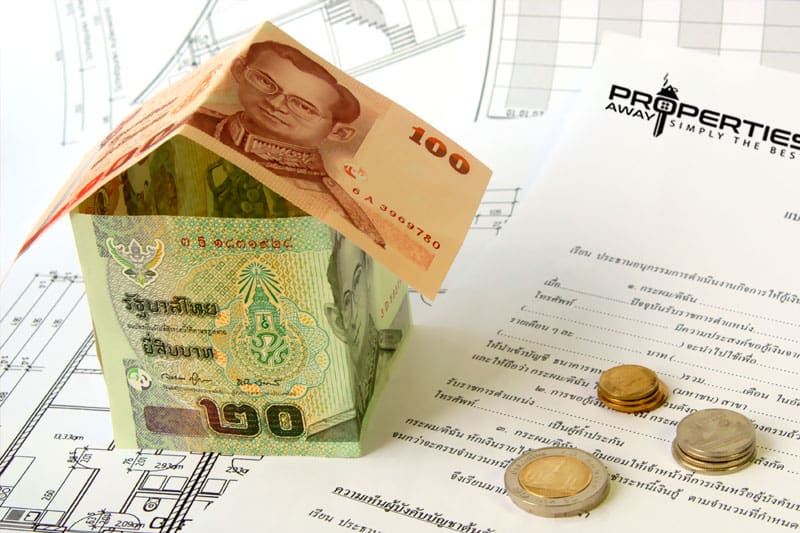
A Thai bank account makes ordinary life on Koh Samui easier — paying rent by transfer instead of cash, settling electricity and water bills, using PromptPay at markets and restaurants. It is not, however, something every long-term resident can simply walk in and get. In 2026 the practical gatekeeper is your visa, not your nationality or how long you plan to stay. This is general information, not financial advice — confirm current requirements with the bank branch itself before you go.
Why a Thai account matters once you're renting long-term
Cash works for short stays, but it gets impractical fast once you have a landlord, a PEA electricity account, a PWA water bill and a fibre internet contract to pay every month. Thai banks also underpin PromptPay, the national instant-transfer system that most Thai landlords, shops and delivery apps expect. Without a Thai bank account, PromptPay isn't available to you, and you're left paying rent in cash or via international transfer fees every single month — workable, but not convenient over a 12-month lease. If you're still weighing a short monthly stay against a full year, our guide to monthly rental vs. a yearly lease on Koh Samui covers how that choice affects deposits and cash flow too.
The visa is what decides, not the bank
Across Bangkok Bank, Kasikorn (KBank), SCB and Krungsri, the consistent pattern in 2026 is that a Non-Immigrant visa — for work (Non-B), marriage or retirement (Non-O), or long-term residence — is what makes an account realistic. A tourist visa, visa-on-arrival or visa-exempt entry is, in practice, treated very differently from bank to bank:
| Bank | Position on tourist / short-stay visas (per their own current pages) |
|---|---|
| Kasikorn (KBank) | Explicitly excludes tourist visas, visa-on-arrival and the DTV visa on its current foreign-customer guidance |
| Krungsri (Bank of Ayudhya) | Also explicitly excludes short-stay/tourist visas on its current account pages |
| Bangkok Bank | No clear published policy either way for 2026; press reports from 2025 describe a tightening for foreigners without long-term visas, but this isn't confirmed on the bank's own current page — ask the branch directly |
| SCB | Current account pages list passport, visa and work permit as documents but do not spell out which visa categories qualify — again, ask the branch |
Because Bangkok Bank and SCB don't publish a clear rule, and because branch-level practice varies noticeably in all four banks, treat this table as a starting point, not a guarantee. If you're on a DTV, tourist visa or visa exemption, the honest expectation for 2026 is that at least two of the four major banks will turn you away outright, and the other two may or may not, depending on the branch you walk into.

What to bring
Requirements differ by bank and branch, but the documents that come up consistently are:
- Passport, with your current visa page
- Work permit, if you have one (expected for a Non-B visa; sometimes asked for even on other Non-Immigrant categories)
- A Thai mobile phone number, registered in your own name
- Proof of address in Thailand — requirements here are uneven between banks. SCB's Jak-Jai account is the one product where this is clearly documented as a requirement; other banks may or may not ask for it depending on the branch. A rental contract, a TM30 confirmation from your landlord, or a Certificate of Residence from Immigration can all serve this purpose if asked for — our first-30-days checklist for moving to Koh Samui covers where each of those documents comes from
Minimum deposits: expect a range, not a fixed number
Published minimum deposits vary by bank and by account type (savings vs. current vs. fixed deposit), and different sources quote different figures even for the same product. As a rough 2026 picture:
| Account type | Typical minimum deposit reported |
|---|---|
| Basic savings account | As low as 0–500 THB at some banks, up to around 1,000–2,000 THB at others |
| Current account | Often around 10,000 THB at SCB and Krungsri, though this is not uniform across all products |
| Foreign currency deposit account | Sometimes quoted from the equivalent of 100 USD, again varying by bank and currency |
Don't treat any single number here as fixed — ask the specific branch what applies to the specific account type you want, since the figures genuinely conflict between sources and change over time.
The 2023–2025 anti-fraud rules: context, not a ban
Since 2023, the Bank of Thailand has tightened rules aimed at stopping "mule accounts" used in scams — including one-device restrictions for mobile banking, facial-recognition verification for some transactions, and closer scrutiny of new accounts generally. This is a real and documented shift in banking practice, and it is very likely part of why some banks and branches have become more cautious with foreign, tourist-visa applicants. What it is not, based on the Bank of Thailand's own published measures, is a blanket national rule that legally bars tourist-visa holders from opening accounts. The exclusion of tourist and DTV visas at Kasikorn and Krungsri is documented on those banks' own pages as their policy, not as a central bank mandate — a distinction worth knowing if a branch cites "new government rules" as a reason to decline you.
If you're on a retirement, Elite or LTR visa
Retirees on a Non-O or Non-O-A visa generally fall into the same Non-Immigrant category described above, so the same banks and documents apply — though branches sometimes ask for the visa extension stamp rather than just the original visa page, so bring both if you have an in-country extension. Holders of the Thailand Privilege (Elite) visa or the Long-Term Resident (LTR) visa are also Non-Immigrant categories in the eyes of most banks, but since these are less common than work or marriage visas, it's worth calling ahead to check that the branch staff recognise the visa type before you make the trip. If most of your income arrives from abroad as a pension or investment payout, ask specifically about a foreign currency deposit account at the same time — it can reduce the number of conversions your money goes through before it reaches your everyday spending account.
Mobile banking security features to expect
Once your account is open, Thai mobile banking apps increasingly require extra verification steps introduced since 2023–2025 — commonly a one-device restriction (the app only works reliably on the phone you registered it on) and facial-recognition checks for larger transfers or new payee registrations. These aren't unique to foreign customers; they apply to Thai account holders too, as part of the same anti-fraud push described above. If you change phones, expect to have to re-register the app in person or through an in-app verification process, not simply by reinstalling it.
PromptPay once you have an account
If you do get an account, registering for PromptPay works the same way it does for Thai nationals — through your mobile number rather than a Thai citizen ID number, which foreigners don't have. Once registered, you can receive and send money instantly using just a phone number, which is how most landlords, minimarts and food-delivery riders expect to be paid. If you don't have a Thai account yet, mobile wallets such as TrueMoney offer a limited alternative for simple payments, though acceptance and functionality are narrower than a full PromptPay-linked bank account.
Checklist: before you go to the branch
- Confirm your visa category qualifies at that specific bank — call ahead rather than assuming
- Bring your passport, visa page, work permit (if applicable) and a Thai SIM registered in your name
- Bring whatever address proof you have — rental contract, TM30 receipt, or Certificate of Residence — even if not explicitly requested
- Ask about the specific account type's minimum deposit and any ongoing minimum balance before opening
- Ask whether PromptPay registration can be done the same day
- If declined at one branch, try another branch of the same bank before assuming the whole bank has refused you — practice genuinely varies
Getting your finances set up is one part of settling in; for the wider first-month sequence — TM30, SIM card, driving license, insurance — see our moving to Koh Samui checklist. And if your ability to stay long-term depends on a specific visa route in the first place, our guide to the digital nomad visa and its alternatives explains how visa choice connects to everyday things like this.
Frequently asked questions
Can I open a Thai bank account on a tourist visa?
It's difficult. Kasikorn and Krungsri explicitly exclude tourist visas, visa-on-arrival and the DTV visa on their current account pages. Bangkok Bank and SCB don't publish a clear policy either way, so practice depends on the branch — ask directly before assuming either outcome.
Which visa makes opening an account realistic?
A Non-Immigrant visa — for work (Non-B), marriage or retirement (Non-O), or long-term residence — is the consistent common denominator across all four major banks in 2026.
Do I need a work permit to open an account?
Often, yes, especially on a Non-B (work) visa. Requirements vary by bank and branch, and some accept other proof of long-term status instead — confirm with the specific branch.
How much money do I need to open an account?
It depends on the bank and account type. Reported minimum deposits range from 0 to around 2,000 THB for basic savings accounts, and around 10,000 THB for some current accounts. Treat any single figure as a starting point, not a guarantee.
Can I use PromptPay without a Thai bank account?
Not directly — PromptPay registration requires a bank account (linked via your mobile number). Without one, mobile wallets like TrueMoney offer a more limited alternative for everyday payments.
Sources
Last checked: 19 September 2026. Facts were cross-checked against several sources; official ones take priority.
- Local knowledge of the properties-away team (2026-09-19)
- Open Bank Account for Foreign Customers – KASIKORNBANK (2026-09-16)
- Current Account – SCB (2026-08-25)
- Jak Jai Account – SCB (sales sheet, address/proof requirement) (2025 (approx.))
- Foreign Currency Deposit – Krungsri (Bank of Ayudhya) (2026-09-18)
- PromptPay – Krungsri (Bank of Ayudhya) (2026-08-06)
- Savings Account – Bangkok Bank
- Bangkok Bank tightens account rules for some foreigners – Bangkok Post (2025-05-29)
- Bank of Thailand – Enhances Measures to Manage Mule Accounts (2025-01-30)
- PromptPay – Bank of Thailand
More from the Long-term rental

Cost of Living on Koh Samui 2026: Monthly Budget Guide
What life on Koh Samui really costs in 2026 without rent: food, scooter, fuel, phone and gym prices, plus two worked example monthly budgets.

Digital Nomads on Koh Samui 2026: DTV Visa & Alternatives
DTV visa rules for 2026, LTR, Privilege and retirement visa alternatives, plus internet, coworking and TM30/90-day/tax duties for nomads on Koh Samui.

How to Find a Long-Term Rental on Koh Samui
How to find a long-term rental on Koh Samui: agents, Facebook groups and portals, who pays the agent's commission, and how to avoid common rental scams.