Home › Long-term rental
Cost of Living on Koh Samui 2026: Monthly Budget Guide

Ask five people what it costs to live on Koh Samui and you will get five different answers, mostly because online cost-of-living articles mix in average rent, worst-case shopping habits, or figures copied from other Thai provinces that don't reflect island prices. This guide leaves rent out entirely — that has its own dedicated guide, linked below — and focuses on what a single person or couple can expect to spend each month living day to day: food, transport, phone, laundry, water, fitness, and the one government fee that is genuinely fixed. The figures below combine our local team's ongoing, on-the-ground experience of living on the island (as of September 2026) with a small number of officially documented prices. Where something is a market estimate rather than an official price, it is marked as such.
How much do you actually need each month, without rent?
Based on our local team's experience living on Koh Samui (September 2026), a realistic starting point for a single person's "good life" — comfortable but not extravagant, eating a healthy mix of Thai and Western food, running a scooter, going out sometimes — is from around 50,000 THB a month, not counting rent. A couple living comfortably together, sharing some costs but not skimping, should plan for roughly 70,000 to 100,000 THB a month, again excluding rent.
These are headline figures, not a strict formula — they describe an overall lifestyle level rather than a total you can build purely from a narrow shopping list. The breakdown below shows where that money tends to go.
Typical monthly costs, item by item
None of the figures in this table are official prices — there is no government price list for daily living costs on Koh Samui. They are current market and experience values, not official prices, useful for planning a budget rather than for holding any single vendor to.
| Item | Typical monthly range (THB) |
|---|---|
| Groceries (cooking mostly at home) | 6,000 – 12,000 |
| Eating out, Thai food | 4,000 – 9,000 |
| Eating out, Western restaurants | 8,000 – 18,000 |
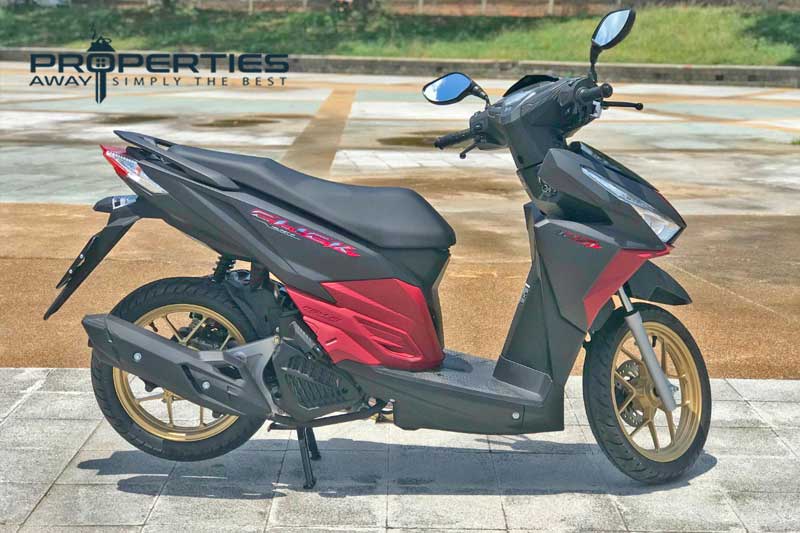
| Scooter rental | from about 4,000, more depending on the model |
| Mobile plan | 150 – 475, depending on operator and plan |
| Laundry service | 60 – 100 per kg |
| Gym membership | 1,500 – 2,600 |
| Drinking water (bottled or refill) | 300 – 600 |
Fuel: a price per litre, not a monthly figure
Fuel is worth separating out because how much you actually spend depends entirely on how much you ride, so a single "monthly fuel cost" figure would be misleading. What is documented is the pump price: on 19 September 2026, Gasohol 95 at PTT and Bangchak stations was priced at 39.94 THB per litre, according to Thairath. This is a reference price (“ราคากลาง”) that excludes any local levy some stations on the island may add, so the price you actually pay at a given pump can be slightly higher. Use it to calculate your own likely fuel spend based on how far and how often you expect to ride, rather than relying on a generic monthly average.
The one official fixed cost: extending your stay
Almost everything above is a market estimate. There is exactly one cost in this guide that is an official, fixed government fee: extending a stay at a Thai immigration office currently costs 1,900 THB, according to the Immigration Bureau's own fee schedule. If you are on an extension-based visa, this is the one figure in your monthly or annual budget you can rely on without qualification.
What about visa runs?
We are deliberately not giving a total figure for a "visa run" here, because there isn't a reliable one. The cost depends on where you go (a nearby border crossing versus a flight to a neighbouring country), how you travel (bus and ferry versus air), whether you book last minute or in advance, and what a given country charges on arrival. On top of that, Thailand's visa-exemption rules changed in September 2026, which affects how often some travellers need to leave and re-enter Thailand in the first place. Rather than budgeting around a number that could easily be wrong by a large margin, check the current visa-exemption terms for your nationality and the entry requirements of wherever you plan to go before you travel, and price your own likely route from there.
Two example monthly budgets
The tables below are worked examples, not additional market research — they take the ranges above and our local team's overall benchmarks and show one plausible way the numbers could add up. Your own total will move depending on how much you cook, how often you eat out, and what you spend on things this guide does not itemise, such as drinks, shopping, entertainment or trips off the island. That spending is shown as a single "everything else" line so the totals reconcile with our local team's overall benchmarks, rather than pretending the itemised list above is exhaustive. Treat both tables as examples only, not additional source data.
Single person: modest versus comfortable
| Item | Modest (THB) | Comfortable (THB) |
|---|---|---|
| Groceries | 7,000 | 10,000 |
| Eating out (Thai / mixed) | 8,000 | 15,000 |
| Scooter rental | 4,000 | 5,000 |
| Fuel (estimate) | ~1,500 | ~2,000 |
| Mobile plan | 300 | 475 |
| Laundry | 800 | 1,000 |
| Gym | 1,800 | 2,600 |
| Drinking water | 400 | 500 |
| Everything else (drinks, shopping, entertainment, incidentals) | ~26,200 | ~27,425 |
| Approximate total (excl. rent) | ~50,000 | ~64,000 |
Couple, comfortable
| Item | THB/month |
|---|---|
| Groceries | 14,000 |
| Eating out (mix of Thai and Western) | 18,000 |
| Scooter rental (one or two scooters) | 7,000 |
| Fuel (estimate) | ~3,000 |
| Mobile plans (two) | 600 |
| Laundry | 1,500 |
| Gym (two memberships) | 4,000 |
| Drinking water | 700 |
| Everything else (drinks, shopping, entertainment, incidentals) | ~36,200 |
| Approximate total (excl. rent) | ~85,000 |
All three examples land within our local team's benchmark ranges — around 50,000 THB for a modest single life, and 70,000–100,000 THB for a couple living comfortably — while showing how the itemised costs above actually contribute to that total.
Rent is the missing piece — deliberately
Every figure above assumes rent is a separate line item, because it varies far more than anything else in this guide, by area and property type. For the current range of long-term rental prices on Koh Samui by property type and location, see our dedicated guide to long-term rental prices on Koh Samui.
Where you live changes more than the rent
Location does not only affect your rent — it changes your grocery run, your commute, and how much you spend on eating out simply because of what is nearby. Chaweng and Bophut put you closest to supermarkets, restaurants and clinics but near the top of the rental market; quieter areas can mean lower rent but more scooter trips for the same errands. Our companion guide to where to live on Koh Samui covers that trade-off area by area.
Health costs and insurance are a separate budget line
Nothing above includes healthcare or insurance premiums, which is deliberate — a private consultation, a hospital stay and an insurance policy all follow a completely different cost logic than daily living expenses, and the right choice depends heavily on your visa type. We cover hospitals, rough treatment costs and insurance options for long-term residents separately in our guide to healthcare and insurance on Koh Samui.
If you are still choosing a visa route
Some of the numbers above interact with your visa choice — someone on a Destination Thailand Visa, for instance, is not tied to the same in-country extension process as someone on a retirement-based Non-O. If you have not settled on a visa route yet, our guide to the digital nomad visa and its alternatives is worth reading before you commit to a monthly budget built around one.
Checklist: building your own monthly budget
- Decide how much of your food budget will genuinely be home-cooked versus eating out, since this is the single biggest swing factor in the table above.
- Get a real quote for a scooter rental, or the running cost of buying one, rather than assuming the low end of the range.
- Estimate your own fuel spend from the current pump price and your expected riding distance, not from a generic monthly figure.
- Add rent separately, using current area-by-area ranges rather than a single island-wide number.
- Budget for the 1,900 THB extension-of-stay fee if it applies to your visa, and check current visa-exemption or visa-run rules for your nationality before assuming a fixed travel cost.
- Set aside a separate healthcare and insurance budget rather than folding it into daily living costs.
Frequently asked questions
How much does it cost to live on Koh Samui without rent?
Based on our local team's experience (September 2026), a single person can live a comfortable, non-extravagant "good life" from around 50,000 THB a month, and a couple living comfortably should plan for roughly 70,000 to 100,000 THB a month, in both cases excluding rent.
Is there an official price list for daily living costs on Koh Samui?
No. There is no government cost-of-living statistic for the island. The ranges in this guide are current market and experience values, except for the immigration extension fee, which is an official, fixed government charge.
How much does it cost to extend a visa at immigration?
Extending a stay at a Thai immigration office currently costs 1,900 THB, according to the Immigration Bureau's own fee schedule. This is the one cost in this guide that is officially fixed rather than a market estimate.
How much does a visa run cost?
There is no reliable total figure, since it depends on your destination, mode of transport and how far in advance you book. Thailand's visa-exemption rules also changed in September 2026, so check the current rules for your nationality before planning a route or budgeting a cost.
What isn't included in these cost-of-living figures?
Rent and healthcare or insurance premiums are deliberately excluded, since both vary too much to fold into a general daily-living budget. They are covered in our separate guides to long-term rental prices and to healthcare and insurance on Koh Samui.
Sources
Last checked: 19 September 2026. Facts were cross-checked against several sources; official ones take priority.
- Local knowledge of the properties-away team (2026-09-19)
- Thairath: fuel prices 19 September 2026 (2026-09-19)
- Fee – Immigration Division 1
- Thailand Visa Exemption 30 Days from 15 Sept 2026: Guide (2026-09-03)
- AIS 3BB Welcome SIM (prepaid mobile plans) (2026-09-12)
- dtac Package Overview (2026-09-18)
- Scooter Rental Prices Koh Samui 2026 (2026-08-23)
- Laundry Prices in Koh Samui (2026-09-03)
- Superpro Samui – book now (gym pricing) (2026-09-12)
- Cost of Living in Koh Samui – Numbeo (2026-05)
More from the Long-term rental

Digital Nomads on Koh Samui 2026: DTV Visa & Alternatives
DTV visa rules for 2026, LTR, Privilege and retirement visa alternatives, plus internet, coworking and TM30/90-day/tax duties for nomads on Koh Samui.

How to Find a Long-Term Rental on Koh Samui
How to find a long-term rental on Koh Samui: agents, Facebook groups and portals, who pays the agent's commission, and how to avoid common rental scams.

Healthcare & Insurance on Koh Samui 2026: Full Guide
Hospitals, rough treatment costs and health insurance options for long-term residents on Koh Samui in 2026, including the Non-O-A visa insurance rules.